Francesca Galasso

stands amidst the scenic backdrop of the Zurich Botanical Garden.
Senckenberg Naturmuseum, Germany
September 5, 2023
The Principle of Teratology in Sporomorphs: Insights, Discoveries & Prospectives
Anthropogenic greenhouse gas emissions are driving current climate warming, affecting aquatic and terrestrial life, and reshaping ecosystems. This modern crisis resembles eological events that lasted millions of years. Palaeontology offers a timeless lens to comprehend how global ecosystems react to environmental shifts. Throughout Earth s history, ecological upheavals linked to volcanic activity, such as outgassing of LIPs, induced rapid environmental changes and biotic extinctions. However, the effects of emissions, subsequent climate shifts, and UVB radiation on past vegetation, are poorly understood. This talk highlights palynology’s role in capturing abiotic and ecological upheavals, using teratology in sporomorphs and geochemical data to infer stressors, linking climate shifts to biodiversity crises and past extinctions.
Russell Bicknell

American Museum of Natural History, USA
September 12, 2023
Modelling predatory arthropods using virtual palaeobiological tools
Examining predation in the fossil record often involves considering examples and patterns of failed predation. However, this approach fails to assess how the predators themselves functioned. Analysing scans or reconstructions of predator groups with 3D tools such as finite element analyses, kinematics, and computational fluid dynamics allows us to model such groups. The application of these innovative approaches within arthropod research over the last five years has therefore allowed the oldest predators to be modelled and understood. To summarise the recent advances in arthropod virtual palaeobiology, I will cover the current state-of-the-art, the key limitations we are experiencing, and some future directions for this accelerating research area.
David Harning

wearing a blue and green hooded sweatshirt.
University of Colorado Boulder
September 19, 2023
Postglacial Arctic shrubification as a future analog: Evidence from ancient DNA records in Iceland and the North Atlantic
As the Arctic continues to warm and glaciers retreat, woody shrubs are expected to expand
northward. This process, known as “shrubification”, has important implications for regional
biodiversity, food web structure, and high-latitude temperature amplification, but the rate of
future changes is poorly constrained. Ancient DNA records from lake sediment are powerful
tools to reconstruct woody shrub migration and expansion during past warm periods in Earth’s
history. Here, I present new vascular plant ancient DNA records from Iceland in the context of
available ancient DNA records from elsewhere in the North Atlantic. Results show that
following deglaciation some woody taxa migrate and expand efficiently while other woody taxa
migrate at a slower pace. As independent records of temperature demonstrate that these
processes occurred during times when temperatures are as high as those expected by the end of
the 21 st Century, the ancient DNA records provide suitable analogs for future rates of
shrubification in some regions of the Arctic.
Nina Papadomanolaki
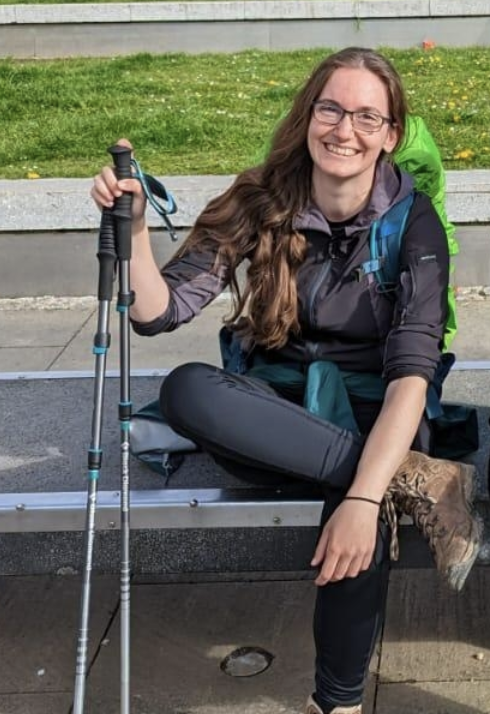
CEREGE, France
September 26, 2023
Causes of reduced deoxygenation severity from the Mesozoic to the Cenozoic
Some of the most extreme deoxygenation events in Earth’s history, called Oceanic Anoxic Events (OAEs), occurred during the Mesozoic Era. While widespread deoxygenation has also been an occasional feature of the later Cenozoic (e.g. during the Paleocene – Eocene Thermal Maximum), one of the questions we still struggle with is why the ocean did not experience a true OAE after the end of the Cretaceous. I will present some of my work illustrating how differences in carbon emissions, nutrient recycling and paleogeography changed from the Mesozoic to the Cenozoic, and speculate what this could mean for future deoxygenation.
Thamizharasan Sakthivel
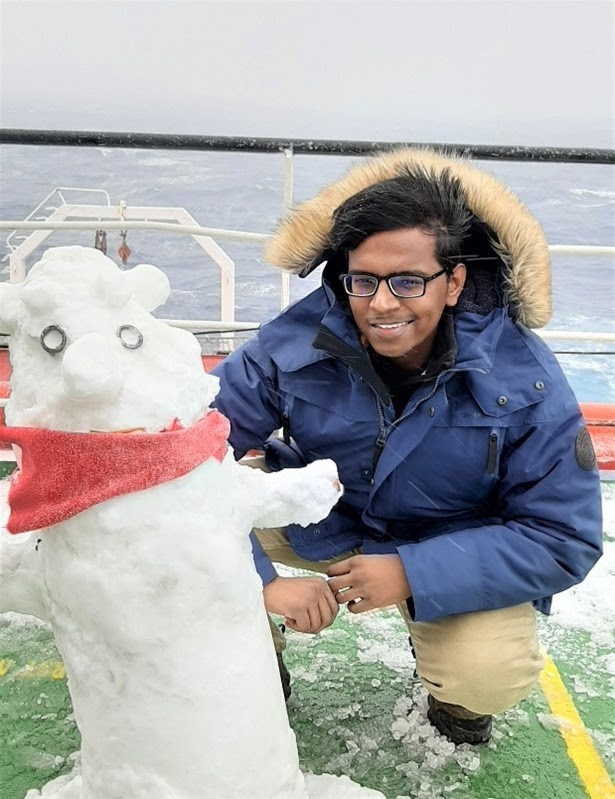
Indian Institute of Science, India
October 3, 2023
Plio-Pleistocene CO2 drawdown: Driven by wildfire-induced terrestrial organic carbon burial
Wildfires play a crucial role in transporting terrestrial organic carbon (OCbiosphere) to the ocean through erosion, creating a substantial carbon sink, yet their impact on OCbiosphere burial during the Plio-Pleistocene boundary remains understudied. In this talk, I will discuss our recent research findings on past wildfire activity, vegetation changes, and continental erosion rates in the Indo-Burma region, along with their connection to OCbiosphere burial in the Nicobar fan. Additionally, I will share our global-scale synthesis of wildfire data and OCbiosphere flux, based on a comprehensive compilation of existing records. Our wildfire data reveals frequent activity during the Plio-Pleistocene boundary and sporadic occurrences in the Early Pliocene. This surge in wildfire activity resulted in a remarkable 3.2-fold increase in continental erosion rates and a 1.7-fold rise in OCbiosphere burial during the Plio-Pleistocene boundary compared to the Early Pliocene. This underscores a significant connection: intensified wildfires, extensive OCbiosphere burial, and lowered atmospheric CO2, highlighting the crucial role of wildfires in Plio-Pleistocene CO2 drawdown.

Studying the transition between micro- and macroevolution from a morphological perspective
The processes operating at the transition between micro- and macroevolution (i.e., the evolution below and above the species level, respectively) encompass intermediate spatio-temporal and taxonomic scales that can be difficult to study. One way to do this is to explore the relationship between intraspecific and interspecific morphological variation in groups of closely related species, whose evolution spanned those intermediate scales. In this talk, I address two case studies—one focused on fossil bivalves and another centred on extant passerines—in which characterisation of the patterns of intraspecific variation yielded insights into the long-term evolution of a group.
Alexandra Zuhr

Alfred Wegener Institute, Potsdam, Germany; Department of Geosciences, Tübingen University, Tübingen, Germany
October 24, 2023
Local-scale deposition and buildup of the stable water isotopic signal in the upper snowpack on the Greenland ice sheet
The proxy signal in climate archives stores the prevailing climatic conditions during the time of formation. However, for sedimentary archives such as marine sediments and polar ice sheets, redistribution of material may occur during or after initial deposition and subsequent formation of the archive, leading to noise in the record that makes reliable reconstructions difficult on local or short time scales. The use of statistical analysis enables characterization and quantification of the complex signal formation in these archives, contributing to a better understanding of the signal content in proxy data.
Yi-Yang Cho

shirt, with wavy hair and accompany by a Blåhaj from IKEA. This image was
captured inside a coffee shop in Taipei City.
National Taiwan Museum
October 31, 2023
Crocodylian Fossil from Taiwan – Unearthing Extinct Reptilian
Giant from the Eastern Margin of Eurasia
While only one extant species persists today, crocodylians have a diverse and
widespread history in East Asia, for example, the first-named crocodylian in Taiwan:
Tomistoma taiwanicus Shikama 1972 from the Pleistocene, which was initially
classified within the same genus as the extant false gharial. However, our recent
examination of its type specimens has led to a reassignment, now placing it within the
large-sized genus Toyotamaphimeia as Toyotamaphimeia taiwanicus n. comb,
marking the first recognized species of Toyotamaphimeia outside Japan. This
discovery not only introduces us to the largest known reptiles in Taiwan’s natural
history, reaching sizes of 6 to 7 meters, but it also suggests an earlier geological
presence of this lineage in Taiwan, possibly proposing its origin from the region.
Further research into these extinct reptilian giants promises to give more clues to the
crocodylian evolutionary history and extinction in Taiwan, as well as shedding light
on the broader framework of Quaternary megafauna extinction in East Asia.
Christine Yifeng Chen

Lawrence Livermore National Laboratory, United States
November 7, 2023
Pal(a)eoPathways: Working at a National Lab as an Earth Scientist
Dr. Christine Yifeng Chen will discuss her career path and transition from academia to a National Laboratory. An outgrowth of immense investment in scientific research initiated by the U.S. government during World War II, the U.S. National Laboratories have served as leading institutions for scientific innovation in the United States for more than seventy years.
The U.S. Department of Energy’s 17 National Labs tackle the critical scientific challenges of our time — from combating climate change to discovering the origins of our universe — and possess unique instruments and facilities, many of which are found nowhere else in the world. They address large scale, complex research and development challenges with a multidisciplinary approach that places an emphasis on translating basic science to innovation.
Anna Weiss

Vision Galveston, United States
November 14, 2023
**20:00 UTC**
Pal(a)eoPathways: Exploring non-profit careers as a paleo-scientist
Non-profit careers provide an opportunity to contribute to important causes, but breaking into the sector can feel opaque to those on the outside. In this talk, Dr. Anna Weiss will discuss her career path from academia to environmental non-profits. She will also give her perspective on the pros and cons of working for a non-profit and transferable skills from academia. In a past life, Anna was a paleoecologist and sedimentologist. She worked as a professor at a small liberal arts college before striking out into industry. Anna hopes her story gives others confidence to pursue non-academic career paths and find a career they love.
Mélina Jobbins

University of Zurich, Switzerland
November 21, 2023
Placoderms from the Anti-Atlas of Morocco: a model for high disparity in early vertebrates
Placoderms are the first group of jawed vertebrates and lived from the Silurian to the end of the Devonian. They are key to understanding the origin of vertebrate features including jaws, teeth, and bone. Recent discoveries from the Anti-Atlas of Morocco demonstrate how morphologically and functionally diverse this group was during the Late Devonian, suggesting a higher disparity and modularity than previously known in the derived arthrodire group.
Muhammad Aqqid bin Saparin

Universiti Teknologi PETRONAS, Malaysia
November 28, 2023
Graptolites research in Southeast Asia; from its uses in biostratigraphy to the paleoenvironment and thermal maturities studies.
Graptolites are colonial organisms whose names translate into ‘writing on the stone,’ and are commonly preserved as black carbon films on a rock surface. Graptolite fossils could be used in a variety of studies, including biostratigraphy, evolutionary biology, palaeobiogeography, palaeoenvironment and hydrocarbon exploration. They are the most widely used index fossil for the Lower Palaeozoic and are recognised as the fossil that contributed to the establishment of the Lower Palaeozoic terrane in Malaysia in the late 1950s and early 1960s. In this talk, we will explore the vital importance of graptolites as a tool for understanding the geologic history of the Southeast Asian region.
 Pal(a)eoPERCS