Danijela Dimitrijević
Friedrich-Alexander-Universität Erlangen-Nürnberg (FAU), Germany
March 5, 2024
Reef community responses to global environmental perturbations
Throughout Earth’s history, reefs have gone through consecutive intervals of waxing and waning. Some waning periods are marked as reef crises because of the pronounced losses of reef carbonate production in geologically short times. These reef crises co-occured and were probably caused by rapid global warming events also known as hyperthermal events. In this talk, we will delve into the impact of these disturbances on reef community composition, the potential for mesophotic environments and higher latitudes to serve as refugia, and the application of trait-based approaches to enhance our understanding of coral vulnerability and resilience to climate change.
Malin Ödalen

GEOMAR, Germany
March 12, 2024
Mechanisms for ocean carbon storage in glacial climate model simulations
Global ocean storage of dissolved inorganic carbon (DIC) varies between climate states. Palaeoproxies indicate that, in glacial times, carbon was drawn out of the atmosphere and stored in the ocean. However, climate models still struggle to reproduce this repartitioning of the carbon stock between reservoirs, and in my work, I strive to understand why that is. In this talk, we will explore the relationship between overturning strength and ocean carbon storage in model simulations, and the role of complexity in the representation of modelled biological carbon uptake. Using a range of simulations in the model cGENIE and CESM2, we clarify the effect of changes in ocean circulation strength on the biological and solubility carbon pumps, respectively. We also investigate how the model initial state can affect the ocean carbon storage response in model simulations, and the potential implications for model intercomparison projects. We show that the ocean storage of CO2 responds less to a strengthening of the biological pump if the initial efficiency of nutrient utilisation in the model is already high. Finally, we show that biological complexity in the form of flexible C:P ratios in organic matter production can increase the model’s ability to draw down carbon from the atmosphere in a cold climate.
Jasmina Weimann

Field Museum of Natural History and the University of Chicago, USA
March 19, 2024
Biomolecule fossilization products reveal the history of Life on Earth and beyond
Proteins, lipids, and sugars are the fundamental building blocks of life. The tissues they generate contain molecular heterogeneities that inform about organismal relationships (=phylogeny), biomineralization, tissue identity, and metabolic capacity. Although such biological signatures have the potential to provide invaluable evidence of the evolutionary history of life and its building blocks on Earth and beyond, most molecular information is thought to be lost in deep time.
Here, I challenge the paradigm of the deep-time lability of biomolecular signatures based on the first integrative (FT-IR/Raman spectroscopy + quantum-chemical modelling, LC/GC/isotope ratio mass spectrometry) analyses of patterns in the macromolecular composition of modern organismal tissues and their carbonaceous fossilization products, sampled through geological time and across the tree of Life. Statistical analyses of different types of chemical data, and experimental modelling of observed reaction schemes, reveal that biomolecules transform during fossilization through mineral-catalyzed oxidative crosslinking into N-,O-,S-heterocyclic polymers. Such endogenous fossil organic matter preserves heterogeneities reflecting original phylogenetic and physiological signatures in altered, but not unrecognizable form. Based on this fundamentally new type of biological information integrable across modern and extinct organisms, I will showcase how molecular signatures can be used (1) to elucidate the early evolution of Life prior to the advent of complex cellular morphology in the fossil record on Earth (and beyond), and (2) to unravel evolutionary responses to major environmental and ecological perturbations in the past, as a foundation to predict future biotic reactions to a changing planet. The broad range of transformative applications places novel, macromolecular biosignatures at the forefront of tools to access mechanistic data on the interplay between the geosphere and biosphere.
Georgy Falster
Australian National University, Australia
March 26, 2024
New reconstruction reveals natural and forced behaviour of the Pacific Walker Circulation over the past 800 years
The Pacific Walker Circulation (PWC) is an important part of the global climate system, and affects weather and climate all over the world. But for many years the PWC has languished in the shadow of its more famous sibling, the El Niño Southern Oscillation, and we don’t really have a great idea of how it behaves. This is not only because the PWC does not always get the attention it deserves, but also because our observational records of the climate system are too short to characterise how the PWC responds to external forcings such as volcanic eruptions and anthropogenic greenhouse gas and aerosol emissions.
Allison Jacobel
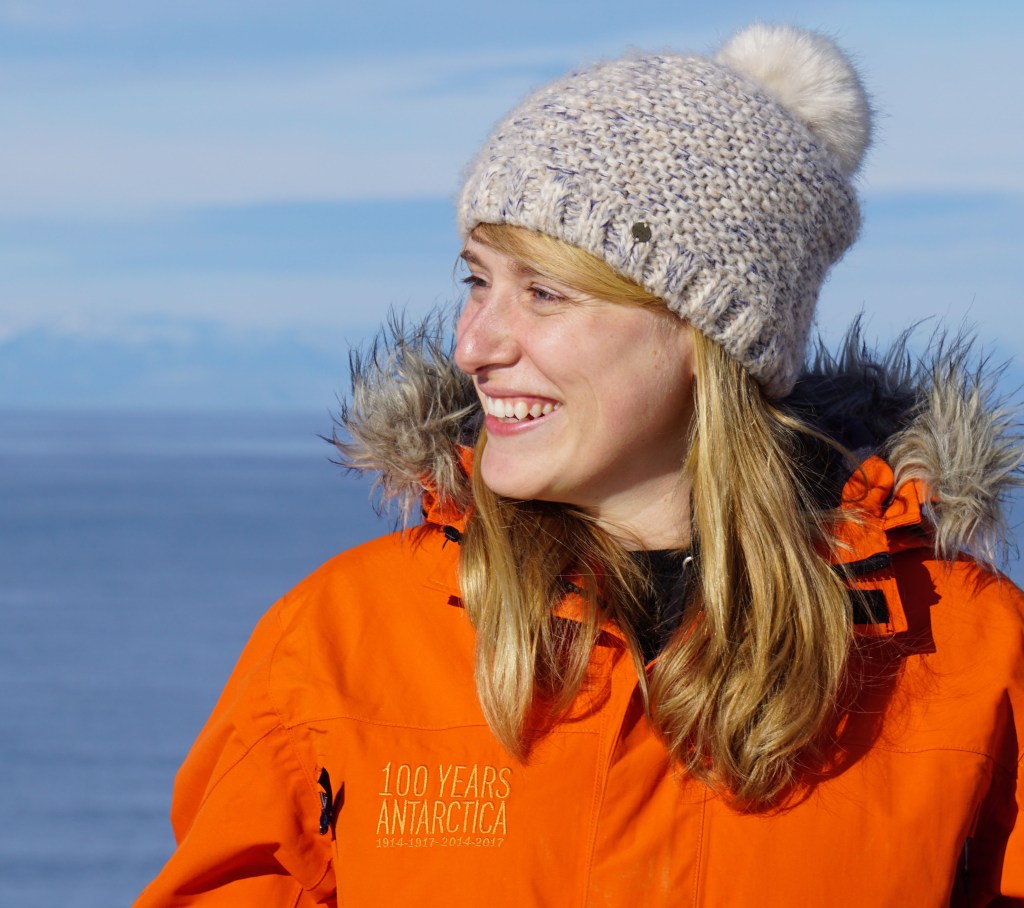
Image description: A woman in an orange parka standing in front of the ocean.
Middlebury College, USA
April 2, 2024
Deep Pacific Carbonate Chemistry Over the Last Deglaciation
High resolution records of ice core pCO2, paired with increasingly quantitative reconstructions of respired carbon storage from the abyssal Pacific Ocean, indicate more carbon in deep waters during the last several glacial cycles. These results are in apparent conflict with evidence for better carbonate preservation during the same interval. In this talk I will present new records of C. wuellerstorfi B/Ca from the central equatorial Pacific that show an increase in the calcite saturation state over the last deglaciation and I will discuss the interpretation of these data in the context of records of respired carbon storage, export production, and nutrient utilization to help improve our understanding of carbonate chemistry and carbon storage in the deep Pacific.
Nicholas Gardner

Image description: Gardner at the Cleveland Museum of Natural History with a cast of the Paleozoic armored fish, Dunkleosteus, behind him.
West Virginia University- Potomac State College, USA
April 9, 2024
Save time, work smarter with Zotero- Note taking, reference management, and more in one tool!
Participants will be shown how they can use Zotero (a free open-source software) to enhance their academic productivity and work more efficiently. With built-in tools, Zotero makes annotation, file management, and reference management a breeze. Unlike many other reference management tools, Zotero is free and not tied to institutional licensing. Migrating from other reference management tools and Zotero is easy, making it possible to switch to using Zotero at any point in your career. While early career researchers and students might benefit the most from this workshop, it will be helpful to anyone who attends.
Isabel Dove

Image description: A white woman with long brown hair, wearing a navy jacket over a maroon turtleneck sweater. She is smiling and standing in front of a shelf filled with labeled white tubes filled with sediment cores.
University of Rhode Island, USA
April 16, 2024
The nitrogen isotopic composition of Chaetoceros resting spores and paleoclimate application: Insights from zombie diatoms
High resolution records of ice core pCO2, paired with increasingly quantitative reconstructions of respired carbon storage from the abyssal Pacific Ocean, indicate more carbon in deep waters during the last several glacial cycles. These results are in apparent conflict with evidence for better carbonate preservation during the same interval. In this talk I will present new records of C. wuellerstorfi B/Ca from the central equatorial Pacific that show an increase in the calcite saturation state over the last deglaciation and I will discuss the interpretation of these data in the context of records of respired carbon storage, export production, and nutrient utilization to help improve our understanding of carbonate chemistry and carbon storage in the deep Pacific.
Arindam Chakraborty

Image description: Arindam Chakraborty, a person with a smile and wearing a Hawaiian blue motive shirt facing the Malacca Strait in Malaysia. He shares a moment with his pet.
University of Malaya, Malaysia
April 23, 2024
Past Environment of the Emerald Islands of India: Evidence from the white and black box fossils
The Neogene marine deep water and more rarely shallow water sediments exposed on the Andaman and Nicobar group of islands in the northeast Indian Ocean and the northern Indian Ocean sediment cores endows an excellent opportunity to reconstruct the paleoenvironment based on qualitative and quantitative analysis of the marine biogenic components and in turn to document changing climate and its influence on the evolution of marine biota. The sediments deposited in these islands during the early Miocene to the early Pleistocene can be co-relatable with the major climatic events like Miocene Climate Optimum (MCO), Indian Summer Monsoon and Early Pliocene low biogenic silica.
Bram Vaes

Photo description: A happy Bram enjoying the winter sun and snow in his favorite environment: the mountains of the Southern Alps near Lake Como
University of Milano-Bicocca, Italy
April 30, 2024
.
Mapping the past: towards quantitative paleogeographic reconstructions for all paleo-sciences
Reconstructions of paleogeography are of key importance to all paleo-sciences. These maps of the past aim to provide important boundary conditions for studies of the past Earth, including topography, paleolatitude, the position of coastlines, and the location of plate boundaries. The plate-tectonic reconstructions used to build these maps have been hugely improved over recent years, and now even go back to more than 1 billion years ago! In this talk, I will discuss recent advances in plate-tectonic and paleogeographic reconstructions and how we – as a community – are moving toward quantitative paleogeographic reconstructions that will benefit all paleo-sciences.
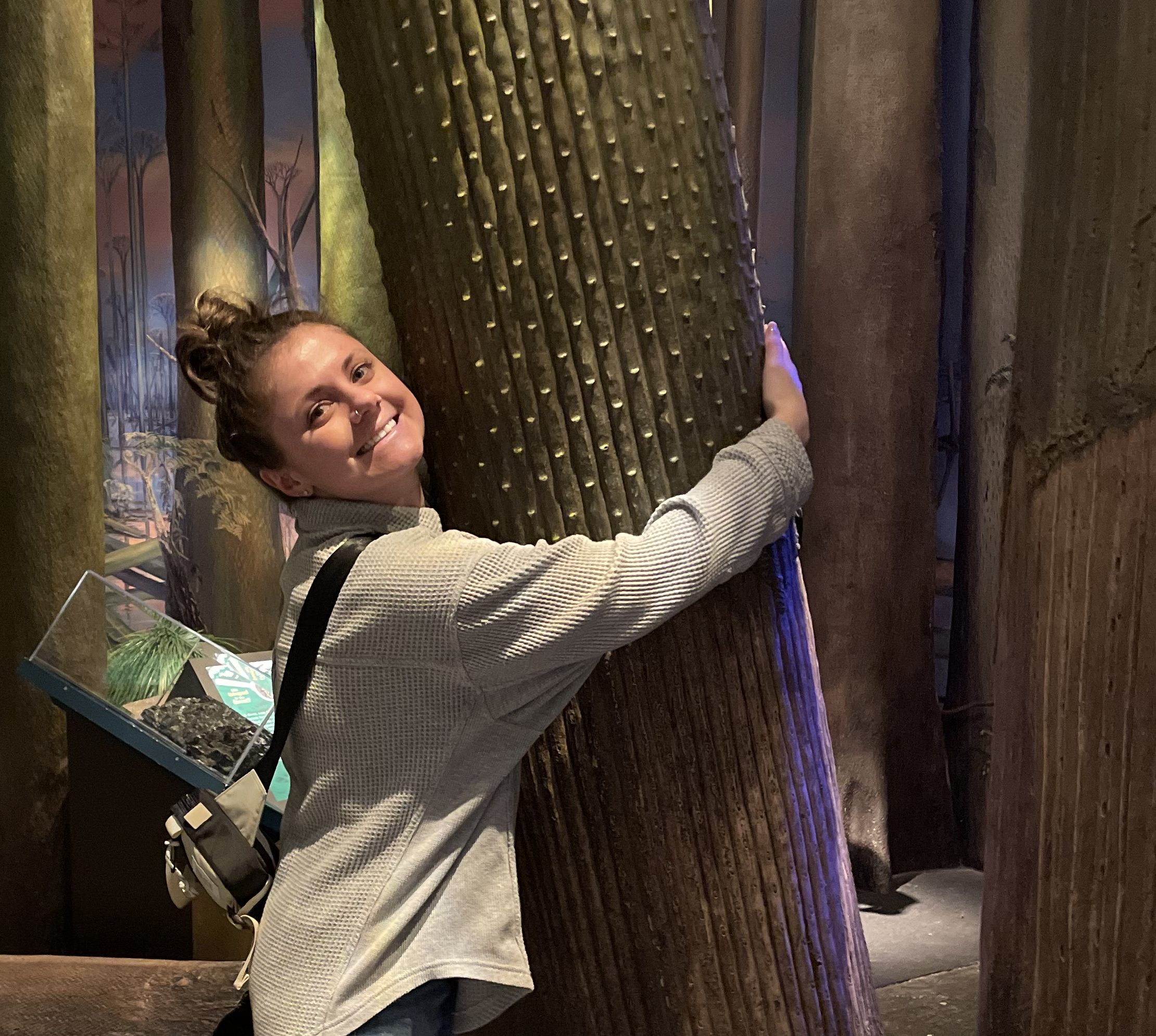
Seeing the forest through its phylogenetic trees: uncovering the Carboniferous origins of Isoetes using phylogenetics, and the fossil record
The extant lycophyte Isoetes possesses a number of enigmatic anatomical and morphological
features amongst its modern floristic peers. However, in the context of the fossil record, we see
these features arise from a 400-million-year evolutionary history and arborescent ancestors that
dominated the Earth’s surface during the Carboniferous. Using phylogenetic methods and the fossil record, I will discuss my preliminary explorations of how the same lineage that swathed
the planet in massive trees 350 million years ago is solely perpetuated by (but nevertheless
persists as) the unassuming genus Isoetes.

An assessment of the historical population trends of Crassostrea tulipa in West Africa
This presentation highlights the assessment of the shellfish fishery in four water systems: Densu and Anyanui in Ghana, Ouidah in Benin, and Lagos in Nigeria. By comparing data from fossilized and modern shells, the researchers evaluated historical and current trends in oyster growth, ages, and performance, revealing pressures influencing changes. Radiocarbon dating and stable isotope analysis determined past and present environmental conditions, while growth parameters were estimated using the thin section technique and von Bertalanffy growth function. Results indicated that oysters in all sites are slow-growing with long lifespans, and growth performance indices were below 3. The study highlights the impact of overfishing, human activities, and climate change on the decline of oyster populations, emphasizing the need for sustainable management of the shellfish fishery in West Africa. Most importantly, the importance of sclerochronological studies for paleo studies.
 Pal(a)eoPERCS